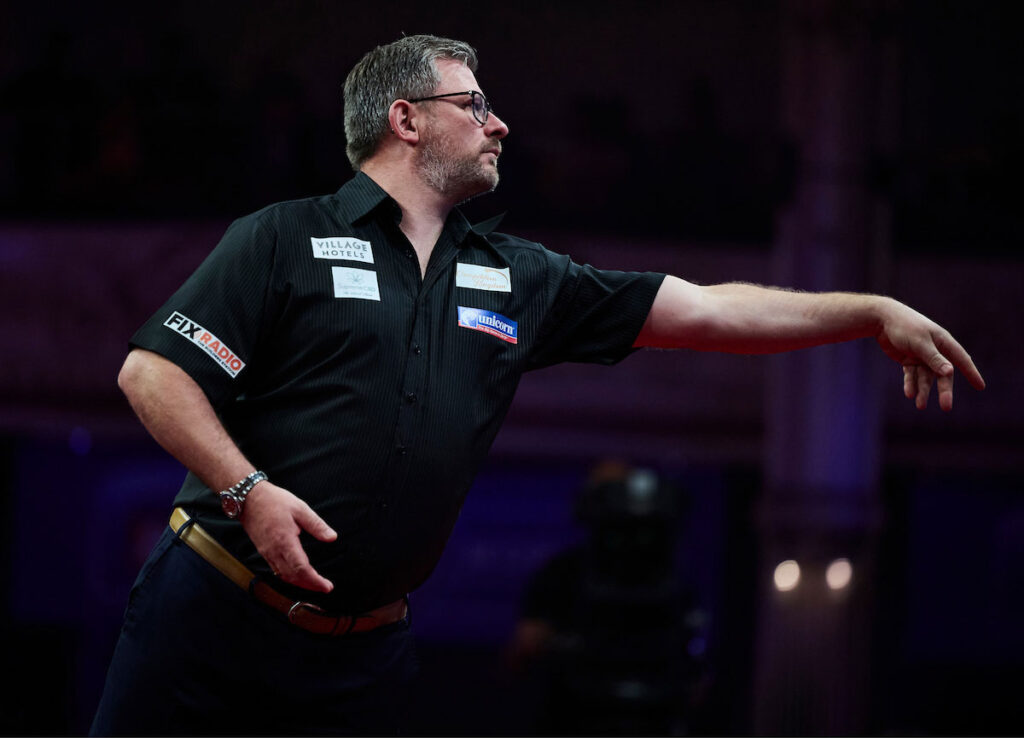
Longevity in professional sport is never accidental. It demands adaptation, resilience and an ability to evolve without losing your identity. James Wade’s career is a masterclass in exactly that.
When he first emerged on the major stage, he was a young left-hander with extraordinary composure and a fearlessness beyond his years. Titles followed quickly, and expectations rose just as fast. Many players burn brightly and fade. Wade did not. Instead, he adjusted.
The standard of the professional game has risen dramatically over the past twenty years. Averages have climbed. Depth has increased. The margins for error have narrowed. Staying competitive in that environment requires constant refinement. Wade has sharpened his scoring when needed, tightened his finishing even further, and maintained the mental steel that defined his early success.
There have been highs and lows, as there are in any long career. Injuries, dips in form, personal challenges — all part of the reality of life in elite sport. What separates the enduring from the temporary is the response. Time and again, Wade has returned to the practice room, recalibrated, and come back stronger.
What makes his longevity particularly impressive is not simply the number of years played, but the relevance maintained. He has not just participated across eras; he has contended in them. From one generation of world champions to the next, Wade has remained in the conversation.
Being built to last is about more than durability. It is about mindset. It is about knowing who you are as a player and refusing to abandon that under pressure. Through changing trends and rising stars, James Wade has stayed true to the qualities that made him a champion in the first place: composure, intelligence and precision.
Two decades on, The Machine is still running — not on nostalgia, but on performance. And in professional darts, that is the ultimate measure of staying power.